
FINAL WORK –
SNUFF BOTTLES_PRODUCT DESIGN
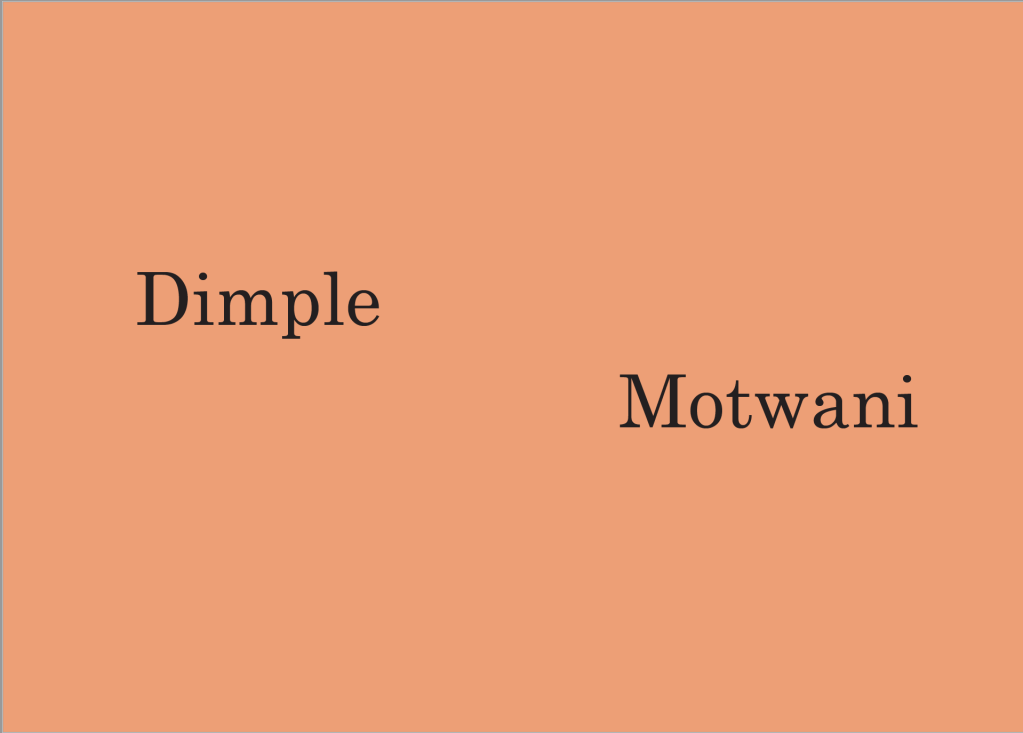
Snuff bottles, as the name suggests, are the containers for storing snuff, mainly used by Chinese and Mongolians. Though tobacco was illegal in Qing Dynasty, snuff was still stored as a remedy for common illnesses like cold, cough, headache, stomach disorders, etc. Soon, snuff bottles were used as the most expensive gifts by the Chinese. By the end of 17th century, use of snuff bottles and offering a pinch of snuff became a ritual and popular in every social class.
Snuff bottles were produced in different shapes, overlaid with different layers of colours, few being plain and the rest, carved. They were made of various materials, including Metal, Tortoise shell, Wood, Ivory, Rhinoceros, Ceramics, Jade, Horn, Porcelain, and the most common one being Glass.
Moreover, as the Chinese art is popular in its idea of symbolism, the design of these bottles was also rich in symbols, that usually reflected the styles and sentiments of the owners. The popular symbols include Shou, 18 Lohan, 8 precious organs of Buddha, animals like horse, dragon, hare, etc. Symbols of horses represented speed, perseverance, rank, power and wealth while hare points to wish for long life and even immortality. Thus, it became evident that the carvings on these bottles were inspired from various real life circumstances and aspects that involved history, beliefs, deities, philosophy, religions and a few symbols that promoted superstition as well. The symbols were also known to be considered as codes that represented the wish expressed by the giver of the gifts. The basic idea of putting these symbols was to direct the owner of the artefact towards bringing wealth, longevity, health, good luck and immortality.
Unfortunately, the use of snuff decreased with the fall of Qing Dynasty. However, the Chinese bottles and their symbols are still desirable by many collectors and museums, and thus, they are still being produced.
PUNCH-MARKED COINS_STRATEGIC DESIGN AND MANAGEMENT
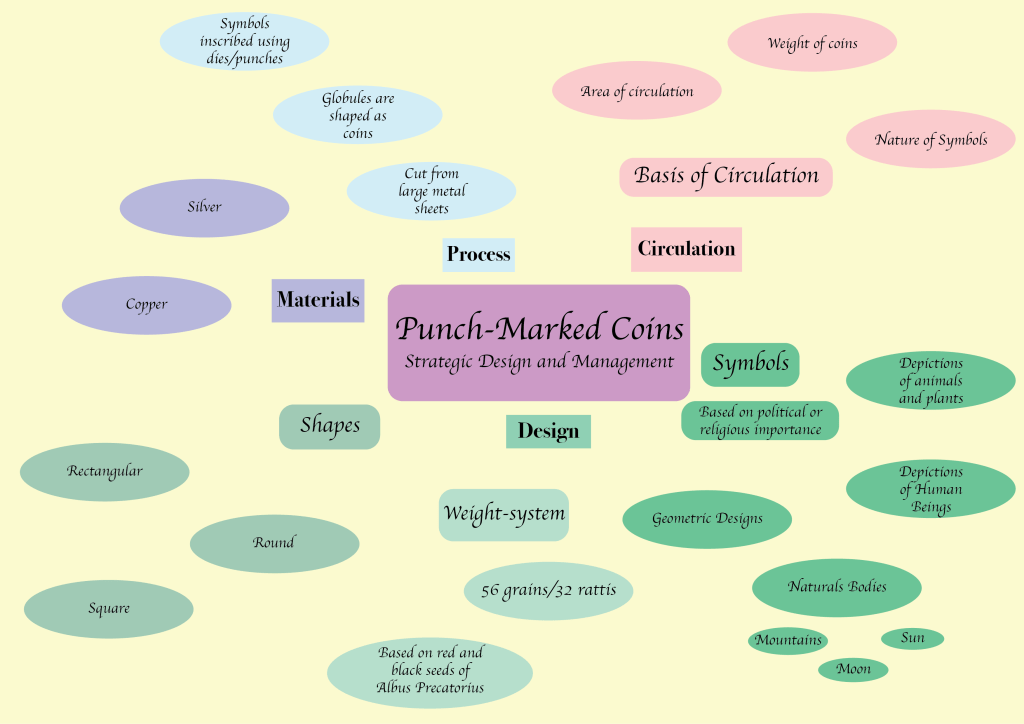
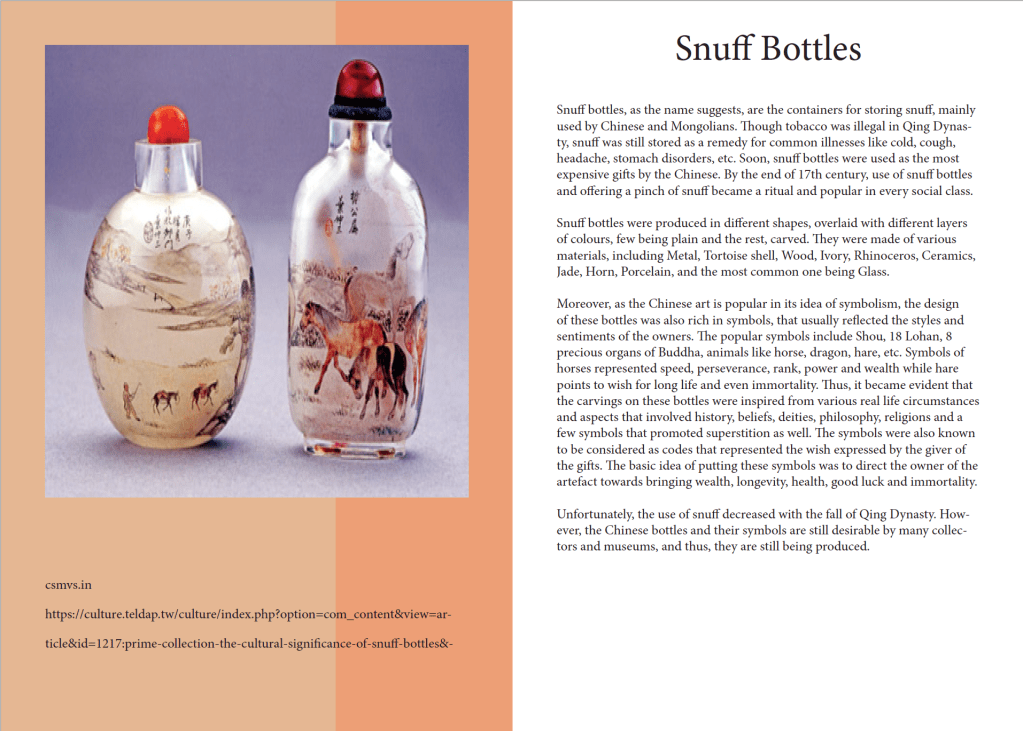
Punch-Marked coins are one of the earliest coins of India, mostly found and used in Northern India, Sri Lanka, Pakistan, Afghanistan and other adjoining countries. These were issued from 6th to 1st century BC, and were in circulation till 5th century only. These coins had an excellence in the maintenance of weight standards.
The coins were available in rectangular, square and round shapes, mainly made of materials like Silver and Copper. They do not contain any inscription or legend, but they usually contain some curious symbols, punched on metal pieces of specific size and weight. The symbols were mostly derived from geometric designs, Natural bodies like Sun, Moon, Mountains, etc. Moreover, a certain type of coins also contained depictions of different animals, plants and human figures. All these symbols, that were inspired from various real life factors, were considered to have a political or some religious importance. Number of symbols on a coin depended on their weight system. The positioning of symbols is at random, and the overlapping was avoided.
Though they did not show any great artistic or aesthetic excellence in their appearance, but they had a great strategy and showed excellence in maintaining the weight standard of the coins.The majority of the punch-marked coins made of silver weighed about 56 grains or 32 rattis. The weight system of most of the coins was based on the red and black seeds of Abrus Precatorius tree (weight of this tree was known as the rattis).
It was interesting how they strategically used different factors to not only design the coins with various inscriptions on them, but also to circulate them across different states. The coins were divided in different regions based on their weight, the nature of the symbols inscribed, and their area of circulation. In the distant hilly terrains of Taxila-Gandhara, the punch-marked coins were a little heavier and carry a single symbol. In the Kosala region of middle Ganges valley, the coins were also of heavy weight nature but came with multiple punch-marked symbols. In the Avanti region of western India light weight single punch-marked coins were in use.
FINAL BOOKLET –



 dimple.design.blog